
Introduction
Living with a feline companion brings immeasurable joy, but sweeping up scattered litter daily quickly dampens the experience. Many cat owners face a constant struggle with aggressive diggers and high pee-ers. Some cats dig furiously like they are searching for buried treasure, sending granules flying across the room. Others lift their hindquarters while urinating, aiming straight at the seam of a standard two-piece box.
Standard litter pans simply cannot handle these behavioral habits. Low walls invite messy floor coverage, while standard covered boxes often feature seams where the lid meets the base. When a high-peeing cat aims at that seam, urine trickles down the outer wall onto your floor, creating stubborn odors and stains. Finding the right enclosure requires a structural design that eliminates leaks and traps flying particles inside.
Why Standard Litter Boxes Fail Messy Cats
Traditional open litter trays feature walls ranging from four to six inches tall. These low boundaries offer no defense against a cat kicking sand backward during their post-use burying ritual. Once granules clear the edge, they scatter across tile, wood, and carpet, clinging to paws and tracking through your home.
Standard hooded litter boxes seem like a logical solution, but they introduce a major flaw for standing pee-ers. Most hooded designs attach a top dome to a lower pan via side snaps. When liquid strikes above the join line, gravity pulls it down the inside wall. Instead of returning to the pan, urine seeps through the seam and pools underneath the box on your floor.
Key Benefits of High-Sided Litter Boxes
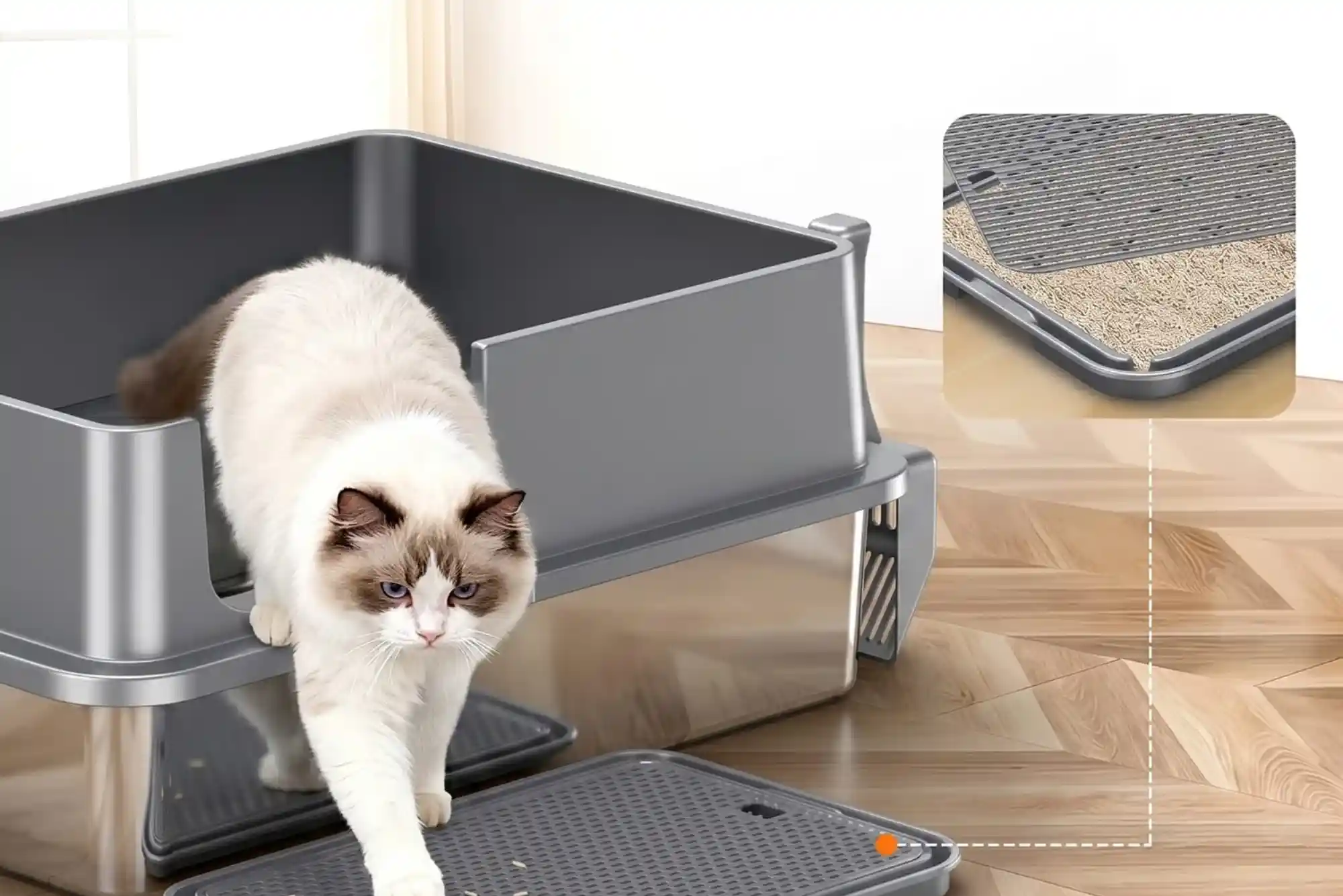
High-sided litter boxes feature solid, continuous walls that extend 10 to 16 inches high. These single-piece or tall-shielded structures act as protective barriers against high spraying and vigorous digging. By eliminating side seams below the spray line, liquid slides harmlessly back down into the absorbent litter bed.
Open-top high-sided designs offer excellent air circulation while keeping mess contained. Many cats prefer open views while doing their business because enclosed spaces make them feel vulnerable to ambush in multi-pet homes. Tall open walls deliver the security of high boundaries alongside the ventilation of an open tray.

Key Benefits of Top-Entry Litter Boxes
Top-entry litter boxes completely enclose the lower pan and sides, requiring your cat to enter through an opening on the roof. Because the bottom section forms a seamless bucket, urine cannot escape regardless of how high your cat aims. Liquid stays entirely inside the basin, safeguarding your floors from damage.
These models excel at preventing litter scatter. Aggressive diggers can fling litter in any direction, but tall walls reflect every particle back into the bed. Furthermore, the top lid functions as an integrated tracking mat that removes loose sand from paws before your cat steps onto the floor.
Essential Features to Look for Before Buying
Material choice significantly impacts long-term durability and odor management. Standard plastic can develop microscopic scratches over time from cat claws and scoops, allowing urine bacteria to settle in. Non-stick smooth plastic or stainless steel boxes resist scratches, preventing odors and letting clumped waste slide off easily during scooping.
Seamless construction is mandatory for high pee-ers. Check whether a high-sided box uses a single molded piece or a securely overlapping shield where the top guard sits inside the lower tray. If the outer guard snaps over the outside rim, liquid will travel down the gap and leak onto the floor.
Top Recommended Litter Boxes for Messy Cats
The Modkat XL stands out as a premier top-entry solution for messy cats. It features a versatile design that allows top or front entry, catering to different cat preferences. Its reusable tarpaulin liner fits seamlessly inside, holding liquid securely while making full litter replacements fast and tidy.
For open-top enthusiasts, the Iris USA High-Sided Litter Box provides excellent protection at a budget-friendly price. Its tall shield wraps around three sides to block high-flying sand and spraying, while a lowered step in the front ensures easy entry for cats of all ages.
Maintenance and Cleaning Tips for High-Sided Systems
Maintaining a deep, high-sided or top-entry box requires steady daily care to prevent waste buildup. Scoop solid waste and wet clumps at least once or twice daily. Because high pee-ers deposit urine against interior walls, use a sturdy metal scoop with sharp edges to scrape away wall clumps cleanly without breaking them apart.
Perform a complete cleaning every three to four weeks. Dump old litter completely and wash the interior basin using warm water and mild dish soap. Avoid harsh chemical cleaners like bleach or ammonia, as strong smells deter cats from using the box and ammonia mirrors the smell of urine.
Frequently Asked Questions
Why does my cat stand up to pee?
Cats stand up or lift their rear ends while urinating due to instinctual marking behavior, joint discomfort, or preferences regarding litter depth. Some cats simply dislike crouched positions if the litter feels unsteady beneath their paws.
Providing a tall, seamless box allows them to pee standing up without making a mess. This keeps your home clean while honoring your cat’s natural physical comfort.
How do I stop my cat from kicking litter everywhere?
You can stop litter scatter by switching to a top-entry box or a high-sided pan with walls at least 10 to 12 inches tall. These physical barriers block flying granules from leaving the tray during vigorous digging.
Additionally, place a heavy-duty textured litter mat outside the box entrance and maintain a litter depth of 2 to 3 inches. Proper litter depth allows your cat to bury waste comfortably without throwing sand over the edges.
Are top-entry litter boxes safe for senior cats?
Top-entry boxes are generally not recommended for senior cats suffering from arthritis, stiff joints, or vision loss. The requirement to jump onto the roof and lower themselves inside can cause discomfort, strain, or fear of slipping.
Senior cats benefit far more from open high-sided boxes with a low front entry dip. This setup provides effortless walking access while keeping side walls high enough to catch stray urine or scattered sand.
Conclusion
Managing a cat that kicks sand or pees high does not have to mean endless floor cleaning. Standard low pans and poorly designed two-piece covered boxes fail because they leave gaps and boundaries exposed to messes. Upgrading to a seamless high-sided pan or a secure top-entry box addresses the root cause of scatter and leaks.