

Digital publishers, online newspapers, editorial teams, SEO specialists, content managers, media startups, and news website owners looking to improve organic visibility and monitor ranking fluctuations more effectively.
Search Intent
Informational and commercial investigation intent. Users want to understand how modern SEO tools help news websites monitor rankings, identify search volatility, and react quickly to algorithm or traffic changes.
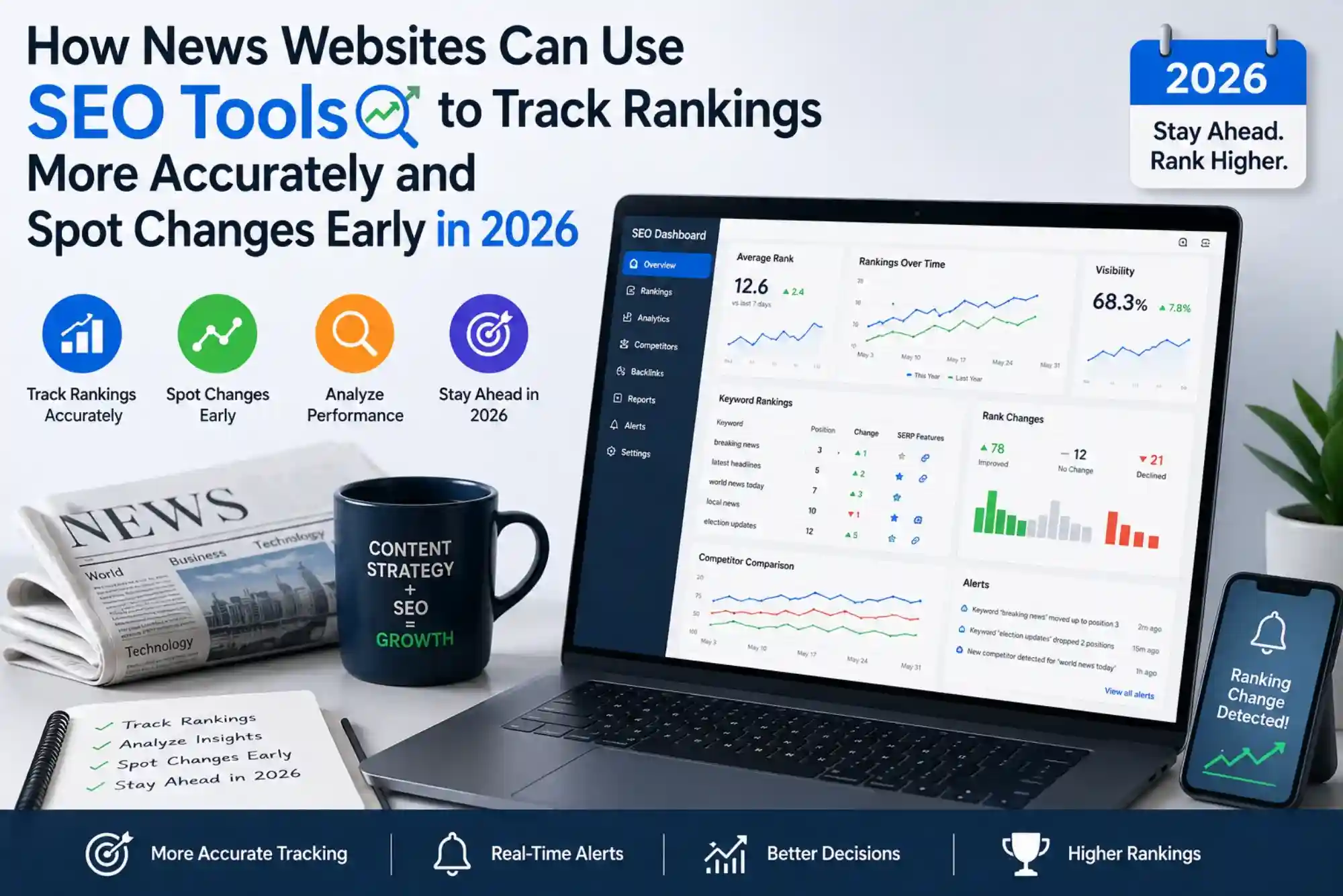
Search visibility changes faster for news publishers than almost any other type of website. Headlines trend for hours, rankings shift within minutes, and algorithm updates can alter traffic patterns overnight. In 2026, relying on occasional manual checks is no longer enough for digital publishers competing in Google News, Discover, and organic search.
Modern SEO tools now provide real-time ranking insights, predictive trend analysis, competitor tracking, and automated alerts that help editorial teams react before traffic losses become serious. For publishers handling dozens or hundreds of stories every day, accurate rank tracking has become a core part of newsroom strategy.
News websites that invest in better SEO monitoring can identify emerging search opportunities earlier, protect existing rankings, and improve long-term audience growth without depending entirely on social traffic.
Why Accurate Rank Tracking Matters More for News Websites
Traditional websites often target stable keywords with slow ranking movement. News platforms operate differently. Stories can rise to the top of search results quickly and disappear just as fast. Search demand fluctuates constantly, especially around breaking news, elections, sports, finance, entertainment, and global events.

Accurate rank tracking helps publishers:
- Identify sudden ranking drops before traffic declines worsen
- Monitor headline performance in search results
- Track Google Top Stories visibility
- Measure article freshness impact
- Analyze competitor publishing speed
- Detect algorithm volatility early
- Improve editorial decision-making
Many publishers also combine SEO monitoring with broader digital visibility strategies discussed in modern search optimization approaches to strengthen authority across multiple content categories.
Key SEO Challenges News Websites Face in 2026
Search engines continue evolving toward real-time indexing and AI-enhanced result evaluation. As a result, publishers face several ranking challenges that standard SEO practices cannot fully address.
| Challenge | Impact on News Websites |
|---|---|
| Rapid SERP volatility | Rankings change multiple times per day |
| AI-generated summaries | Reduced click-through opportunities |
| Google Discover fluctuations | Unpredictable traffic spikes and drops |
| Breaking news competition | Higher pressure on publishing speed |
| Content freshness signals | Older articles lose visibility quickly |
| Core updates | Traffic instability across entire sections |
Because of these challenges, publishers need SEO tools capable of monitoring changes continuously rather than once per week or month.
Features News Publishers Should Prioritize in SEO Tools
Not every SEO platform is designed for fast-moving publishing environments. News organizations benefit most from tools that support high-frequency data updates and real-time monitoring.
Real-Time Rank Tracking
Publishers should prioritize tools that refresh rankings several times daily. Hourly updates are especially valuable during major events or trending stories.
Real-time tracking helps editors understand:
- Which headlines gain traction fastest
- When rankings begin dropping
- Whether article updates improve visibility
- How competitors overtake specific stories
Google News and Discover Monitoring
Organic search alone no longer represents total visibility for publishers. Many traffic spikes originate from Google Discover and Top Stories placements.
Advanced SEO platforms now monitor:
- Top Stories appearances
- Discover impressions
- Mobile visibility patterns
- News carousel rankings
- Featured snippet presence
Understanding how content performs across these surfaces allows editorial teams to optimize content formats more effectively.
SERP Volatility Alerts
Algorithm shifts often appear gradually before becoming widespread. SEO monitoring tools with volatility detection can warn publishers when ranking patterns change unexpectedly.
These alerts are useful because they help publishers distinguish between:
- Normal keyword fluctuation
- Competitor outranking
- Technical SEO issues
- Site-wide visibility drops
- Google algorithm updates
How Newsrooms Can Use SEO Data More Strategically
SEO tracking becomes more valuable when editorial teams actively integrate ranking data into publishing decisions. The most successful publishers now combine newsroom operations with SEO intelligence.
Headline Optimization
Even small headline changes can influence rankings significantly. SEO tools help editors compare which headline structures perform better for search visibility.
For example, publishers can monitor:
- Keyword placement impact
- Question-based headlines
- Breaking news urgency phrases
- CTR differences across title variations
Writers improving editorial engagement may also benefit from understanding content readability and engagement techniques that naturally support stronger SEO performance.
Content Freshness Monitoring
Search engines continue rewarding updated reporting for developing topics. SEO tools help publishers identify articles that begin losing freshness signals.
Teams can then:
- Update statistics and quotes
- Refresh timestamps
- Add new developments
- Expand coverage depth
- Improve internal linking
This strategy often extends the lifespan of important news content.
Competitor Tracking
Competitor monitoring is essential in competitive publishing niches such as finance, sports, politics, and technology.
SEO platforms can reveal:
| Competitor Insight | Why It Matters |
|---|---|
| Publishing frequency | Identifies aggressive coverage patterns |
| Ranking overlap | Shows direct keyword competition |
| Top-performing topics | Reveals audience demand trends |
| Traffic visibility changes | Signals algorithm effects |
Publishers using structured keyword strategies often improve content planning by understanding the relationship between primary and secondary keywords across topical clusters.
The Growing Importance of AI-Assisted SEO Analysis
Artificial intelligence now plays a larger role in modern SEO platforms. Instead of simply displaying ranking data, many tools interpret trends automatically and recommend actions.
AI-assisted SEO analysis can help publishers:
- Predict declining article performance
- Identify emerging search trends
- Recommend related topics
- Detect unusual ranking movement
- Analyze user engagement patterns
This reduces manual analysis time for editorial teams managing large publishing schedules.
Publishers exploring AI-driven workflows may also find value in broader discussions around machine learning operations and automation systems used in modern digital environments.
Best Practices for Tracking Rankings More Accurately
Accurate SEO tracking requires more than installing a tool and checking keyword positions occasionally. Publishers need a consistent monitoring strategy.
Track by Device Type
Mobile rankings often differ dramatically from desktop search results. Since most news traffic now comes from mobile devices, publishers should prioritize mobile SERP tracking.
Monitor Topic Clusters Instead of Single Keywords
News coverage usually spans multiple related queries. Tracking clusters provides a more realistic picture of visibility.
For example, coverage about elections may involve:
- Candidate names
- Polling updates
- Debate coverage
- Live results
- Regional searches
Cluster tracking helps publishers understand total topic authority rather than isolated keyword movement.
Use Automated Alerts
Manual monitoring is too slow for modern publishing cycles. Automated notifications allow SEO teams to respond immediately when:
- Rankings decline sharply
- Pages disappear from Top Stories
- Technical indexing issues appear
- Traffic patterns change suddenly
Compare Search Visibility with Traffic Data
Rankings alone do not always explain audience behavior. Combining SEO data with analytics platforms provides a clearer understanding of user engagement.
Publishers should compare:
| SEO Metric | Supporting Analytics Metric |
|---|---|
| Keyword rankings | Organic sessions |
| CTR performance | Bounce rate |
| Top Stories visibility | Engaged reading time |
| Discover impressions | Returning visitors |
Technical SEO Monitoring Is Becoming More Critical
Technical performance increasingly influences news rankings. Slow-loading pages, indexing delays, and mobile usability issues can reduce visibility rapidly during competitive news cycles.
Modern SEO tools now monitor technical factors including:
- Core Web Vitals
- Crawl efficiency
- Structured data errors
- AMP implementation
- Indexation issues
- Server response times
For deeper technical references and evolving optimization methods, publishers can review industry resources here: [Insert relevant reference link here]
How Smaller Publishers Can Compete More Effectively
Large media organizations often dominate high-volume search results, but smaller publishers can still compete by using SEO tools strategically.
Smaller news websites should focus on:
- Niche topic authority
- Regional coverage
- Faster reporting speed
- Long-tail keyword opportunities
- Local search optimization
Accurate tracking helps smaller publishers identify underserved search opportunities before larger competitors react.
Common SEO Tracking Mistakes News Websites Should Avoid
Even advanced publishers sometimes misinterpret SEO data or rely on incomplete metrics.
Common mistakes include:
- Tracking only homepage visibility
- Ignoring mobile rankings
- Overreacting to short-term fluctuations
- Neglecting Google Discover data
- Using outdated keyword lists
- Failing to segment by content category
SEO performance should always be evaluated within broader editorial and audience contexts.
The Future of SEO Monitoring for Publishers
SEO tracking tools in 2026 are moving toward predictive analysis rather than reactive reporting. Instead of simply showing what changed yesterday, modern platforms increasingly estimate what may change next.
Future developments likely include:
- AI-driven traffic forecasting
- Predictive ranking alerts
- Automated content recommendations
- Real-time competitor benchmarking
- Integrated newsroom dashboards
As search engines continue prioritizing freshness, authority, and user engagement, publishers that respond quickly to SEO signals will maintain stronger visibility.
Frequently Asked Questions
Why do rankings change so quickly for news websites?
News rankings fluctuate rapidly because search engines prioritize freshness, relevance, trending topics, and user engagement during active news cycles.
What is the most important SEO metric for publishers in 2026?
There is no single metric, but real-time visibility across Google Search, Top Stories, and Discover has become extremely important for publishers.
How often should news websites monitor rankings?
High-traffic publishers should monitor rankings daily or hourly for major topics and breaking stories.
Can smaller news websites compete against major publishers?
Yes. Smaller publishers can succeed by targeting niche topics, regional stories, and underserved search opportunities while reacting quickly to ranking trends.
Do SEO tools help with Google Discover visibility?
Many advanced SEO platforms now provide Discover impression tracking and visibility analysis alongside traditional keyword monitoring.
Conclusion
SEO tools for news websites have evolved far beyond basic keyword tracking. In 2026, successful publishers rely on real-time monitoring, AI-assisted analysis, volatility alerts, and competitor intelligence to maintain search visibility in a rapidly changing environment.
Publishers that detect ranking shifts early can adjust headlines faster, update stories strategically, and protect valuable traffic before losses become significant. Whether managing a large newsroom or a smaller niche publication, accurate SEO tracking is now essential for sustainable audience growth.
The news organizations that combine editorial quality with intelligent SEO monitoring will be better positioned to adapt to algorithm changes, evolving search behavior, and increasingly competitive digital publishing landscapes.
Related Reading: Best SEO Tools for News Websites to Track Rankings More Accurately in 2026
Related Reading: Best SEO Reporting Tools for News Websites reporting rankings and visibility with less manual work in 2026
Related Reading: Free vs Paid SEO Tools for News Websites: Which Option Makes More Sense in 2026?
Related Reading: Best SEO Audit Tools for News Websites that flag ranking-related technical problems early in 2026
Related Reading: What Are SEO Tools For News Websites and Which Features Matter Most in 2026?
Related Reading: Best AI SEO Tools for News Websites that improve SEO tracking and workflow automation in 2026
Related Reading: Best All-in-One SEO Tools for News Websites in 2026: What to Use and Why