
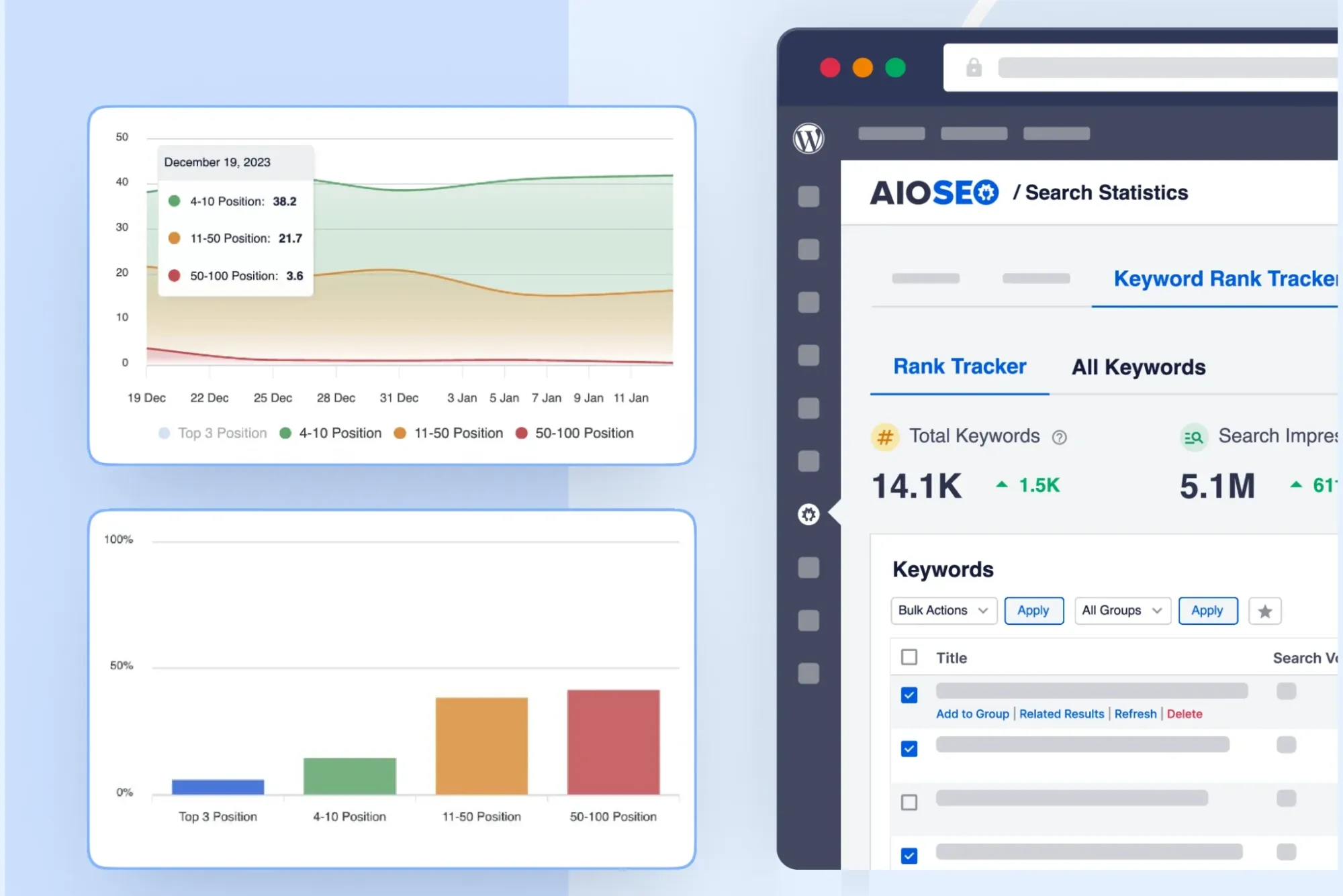

Rank tracking for news websites is one of the most technically demanding tasks in digital publishing. A news article published on Monday morning may peak in search visibility by Tuesday, drop entirely by Thursday, and generate a secondary traffic wave six months later when a related story brings the topic back into the news cycle. Standard rank tracking tools — designed for evergreen content sitting in stable positions over months — were never built to capture that kind of movement. The best SEO tools for news websites approach rank tracking differently, offering the SERP feature visibility, update frequency, and Google News-specific data that news publishers actually need to understand how their content is performing in search.
This guide covers the tools that handle news rank tracking most effectively in 2026, what each one measures, where their limitations lie, and how to build a monitoring workflow that gives editorial and SEO teams genuinely actionable data.
Why Standard Rank Tracking Fails News Publishers
Most rank tracking platforms were designed around a simple model: track a set of target keywords, check positions daily or weekly, report on movement over time. For a SaaS product or an e-commerce category page targeting a stable keyword, that model works well. For news content, it breaks down in several important ways.
First, news articles target an enormous volume of queries — many of which are not known in advance because they emerge organically as a story develops. Pre-loading keywords before publication is only possible for planned content; breaking news creates keyword opportunities that no tracker can anticipate. Second, the most valuable SERP placements for news content — Top Stories, Google Discover, Google News — are not standard organic positions. A news article might appear in position one of the Top Stories carousel while ranking nowhere in the standard organic results, or vice versa. Tools that only report organic rankings miss this entirely. Third, news rankings decay rapidly. A tool that updates position data once every 24 hours shows only a fraction of the volatility that actually occurs across a news article’s lifecycle.
These limitations make tool selection significantly more consequential for news publishers than for most other types of websites.
Top SEO Tools for Accurate News Rank Tracking in 2026
Google Search Console
Google Search Console remains the most reliable and accurate source of ranking data available to news publishers — not because it is the most feature-rich, but because it reflects real Google data rather than estimated positions from third-party crawlers. The Performance report shows the actual queries driving impressions and clicks to each article, the average position for each query, and how those metrics change over any selected time period.

For news publishers, the ability to filter performance data by search type is particularly valuable. Switching between Web, News, Image, and Discover search types gives a segmented view of how different discovery channels are contributing to traffic. An article might have weak standard organic rankings but strong Google News visibility — a distinction that a single aggregated performance view would obscure. The URL-level inspection feature also allows SEO managers to check the indexing and ranking status of a specific article immediately after publication, verifying that Google is reading it correctly before the critical early traffic window closes.
The main limitation of Search Console for rank tracking is that it reports average positions over time rather than real-time or hourly snapshots. It is an essential analytical layer, but it needs to be supplemented with tools that provide more granular SERP feature monitoring.
Semrush Position Tracking
Semrush’s Position Tracking module is one of the most capable rank tracking tools for news publishers that need to monitor both standard organic positions and SERP feature appearances. It tracks positions daily, supports large keyword sets, and — critically — flags when tracked keywords are appearing in SERP features including Top Stories, Featured Snippets, and People Also Ask boxes.
For news SEO teams, the SERP Features report within Position Tracking provides a clear view of which articles are winning news-specific placements and which are missing them despite good content. This makes it possible to identify patterns — certain article formats, schema implementations, or topic categories — that consistently earn Top Stories placements versus those that do not, and to adjust accordingly.
The Cannibalization Report is another tool within Semrush that is particularly relevant to news publishers, who frequently publish multiple articles on the same evolving story. When several articles on similar topics are competing for the same query, the report identifies the conflict and flags which URL Google is currently favouring, allowing editorial teams to decide whether to consolidate content or differentiate the articles’ keyword focus more clearly.
Ahrefs Rank Tracker
Ahrefs Rank Tracker provides daily position updates alongside detailed SERP feature tracking, historical position data, and competitor comparison. For news publishers monitoring coverage of specific ongoing topics — court cases, political developments, regulatory changes — the ability to track competitor rankings alongside your own positions gives editorial teams a real-time view of which outlets are winning search visibility for the queries that matter most to their audience.
The Share of Voice metric within Ahrefs Rank Tracker is especially useful for news operations with multiple vertical beats. It calculates what percentage of the total available organic clicks for a tracked keyword set is being captured by the site, providing a single headline metric that summarises ranking performance across a large set of articles and keywords rather than requiring item-by-item review.
Ahrefs also integrates directly with Google Search Console data, pulling in real impressions and click data alongside its own position estimates. This dual-source view helps resolve discrepancies between third-party position estimates and actual Google performance data, which are common in news contexts where ranking volatility makes point-in-time crawl estimates unreliable.
Advanced Web Ranking
Advanced Web Ranking is one of the few dedicated rank tracking platforms built with enough flexibility to serve news publishers effectively. It supports update frequencies as granular as hourly for high-priority keyword sets — a meaningful capability for breaking news monitoring where positions can change dramatically within a few hours of a story going live. It also supports tracking across multiple search engines, device types, and geographic locations simultaneously, which matters for news organisations with international readership.
The SERP features monitoring within Advanced Web Ranking is comprehensive, covering Top Stories, Local Pack, Image Pack, Knowledge Panel, and Featured Snippets alongside standard organic positions. For news publishers that rely on Google Discover as a significant traffic source, the platform’s integration of Discover performance data provides additional visibility beyond what standard rank trackers offer.
The platform’s white-label reporting options and API access make it well-suited to larger news organisations that need to feed ranking data into editorial dashboards or automated alerts rather than checking a separate tool manually.
Accuranker
Accuranker is a specialist rank tracking platform known primarily for the speed and accuracy of its data updates. It offers on-demand ranking refreshes — allowing users to pull a fresh position check at any moment rather than waiting for scheduled daily updates — which is particularly valuable during breaking news situations where a site needs to know immediately whether a just-published article has entered the Top Stories carousel.
Its SERP feature tracking includes Top Stories visibility alongside standard features, and its competitor tracking module allows news publishers to monitor the ranking performance of specific competitor outlets across the same keyword sets. The platform’s interface is designed specifically for rank tracking rather than as one module within a broader SEO suite, which makes it faster to navigate for teams whose primary monitoring need is ranking data rather than full-site auditing or keyword research.
Comparing the Tools: A Practical Reference for News Publishers
| Tool | Update Frequency | Top Stories Tracking | Google News Data | Best For |
|---|---|---|---|---|
| Google Search Console | Daily (lag of ~2 days) | Via search type filter | Yes — native News search type | Accurate real Google data; post-publication analysis |
| Semrush Position Tracking | Daily | Yes — SERP features report | Partial via Search Console integration | SERP feature monitoring; cannibalization detection |
| Ahrefs Rank Tracker | Daily | Yes | Via Search Console integration | Competitor tracking; Share of Voice across beats |
| Advanced Web Ranking | Up to hourly | Yes — comprehensive | Yes — Discover data included | High-frequency monitoring; multi-geo news operations |
| Accuranker | Daily + on-demand | Yes | Partial | Breaking news real-time checks; fast data refresh |
What to Look for When Choosing a Rank Tracker for News
Beyond the headline features, several practical considerations determine whether a rank tracking tool genuinely fits a news publisher’s workflow rather than simply appearing capable on a feature comparison page.
- SERP feature coverage: The tool must distinguish between Top Stories, standard organic, and Google Discover positions. A tool that aggregates these into a single position number is not useful for news SEO.
- Keyword volume capacity: News sites may need to track thousands of keywords across hundreds of articles simultaneously. Tools with low keyword caps require expensive tier upgrades to be genuinely useful at news scale.
- Historical data depth: Understanding a site’s ranking performance across an entire news cycle — including the initial surge, the decay, and any secondary peaks — requires historical position data going back months, not just the past 30 days.
- Alert functionality: Automated alerts when rankings move significantly — up or down — mean editorial and SEO teams can respond quickly without needing to check dashboards manually throughout the day.
- Integration with analytics: Position data is most useful when it can be correlated with traffic data. Tools that integrate with Google Analytics 4 or Google Search Console allow teams to connect ranking changes directly to traffic impact rather than treating them as abstract position numbers.
For digital publishers operating in competitive markets, understanding how to build sustainable visibility through search requires both the right tools and the right strategy framework. The broader question of how organisations approach market entry and visibility has direct parallels with how news publishers build search presence in competitive topic areas — requiring a combination of technical accuracy, strategic positioning, and consistent execution. For publishers looking to understand how content visibility connects to wider digital marketing performance, resources covering how digital marketing drives measurable success can provide useful context for positioning SEO within a broader traffic strategy. For the most current guidance on how Google evaluates and ranks news content specifically, the documentation is the authoritative reference point.
Building a News Rank Tracking Workflow That Works in Practice
Having the right tools matters less than having a workflow that uses them consistently and in the right sequence. For news publishers, a practical rank tracking workflow typically operates across three time horizons.
For breaking news, on-demand rank checks via Accuranker or manual URL inspection in Google Search Console should happen within the first hour of publication for high-priority articles. This confirms whether the article is being indexed and whether it has entered the Top Stories carousel for its target queries — information that is actionable immediately if the article needs a headline adjustment, schema fix, or internal link boost to improve its eligibility.
For active story coverage — topics being covered across multiple articles over days or weeks — daily Semrush or Ahrefs position tracking gives editorial teams a view of which articles are gaining or losing ground for key queries, when competitor coverage is starting to outrank their own, and whether cannibalization between related articles is emerging as a ranking problem.
For long-term performance analysis, monthly Search Console data reviews provide the most accurate picture of how ranking performance has evolved across article categories and topic areas. This session should identify which editorial beats are consistently generating Top Stories placements, which are underperforming relative to the volume of content produced, and where systematic technical or content improvements could generate measurable visibility gains.
Frequently Asked Questions
Do news websites need different rank tracking tools than standard websites?
Yes. News websites require tools that specifically track Top Stories carousel appearances, Google News positions, and Google Discover visibility — none of which standard rank trackers were built to capture. They also benefit from higher update frequencies and on-demand refresh capabilities that matter far less for evergreen content sites where positions change slowly over weeks rather than hours.
How accurate are third-party rank tracking tools for news content?
Third-party tools provide position estimates based on crawler data, which introduces a degree of inaccuracy for any content type — but particularly for news, where positions change rapidly between crawl intervals. Google Search Console data is the most accurate source for actual performance because it reflects real user search data rather than crawler estimates. Third-party tools are most valuable for competitor tracking and SERP feature monitoring, where Search Console provides no comparative data.
How frequently should a news website check its rankings?
For breaking news articles, an initial check within the first hour of publication is valuable for catching indexing or structural issues quickly. For ongoing coverage, daily automated tracking is sufficient for most editorial needs. Manual spot checks during significant news events — when multiple articles are competing for the same high-volume queries simultaneously — give teams the real-time visibility that scheduled daily updates cannot provide.
Can rank tracking data improve editorial decisions, not just SEO decisions?
Yes, and this integration is where the most sophisticated news publishers are investing effort in 2026. When ranking data is surfaced directly within editorial dashboards — showing which articles are in Top Stories, which are declining in position, and which competitor articles are gaining ground — editors can make informed decisions about follow-up coverage, article updates, and story angle prioritisation based on search performance data rather than relying solely on pageview metrics.
Accurate rank tracking for news websites requires tools specifically designed for the volatility, SERP complexity, and speed of the news environment. Google Search Console provides the most reliable baseline data; Semrush and Ahrefs add competitor intelligence and SERP feature monitoring; Advanced Web Ranking supports high-frequency tracking for breaking news; and Accuranker provides the on-demand refresh capability that real-time coverage demands. No single tool covers every need, which is why the strongest news SEO stacks combine two or three of these platforms in a workflow calibrated to the publication’s editorial rhythm. The best SEO tools for news websites are ultimately the ones that fit that rhythm — delivering accurate, actionable ranking intelligence at the moment it can actually influence decisions rather than after the opportunity has passed.
Related Reading: How News Websites Can Use SEO Tools to track rankings more accurately and spot changes early in 2026
Related Reading: Best SEO Reporting Tools for News Websites reporting rankings and visibility with less manual work in 2026
Related Reading: أفضل طرق الدفع لشراء عملة بيت كوين